


BIG FEELINGS,
GENTLE TOOLS
WHAT WE CREATE
We offer simple, accessible tools that help children:
-
Children learn to notice what they’re feeling and understand that emotions are a normal part of everyday life.
-
We give kids simple language and tools to share their feelings in ways that feel calm, clear, and supported.
-
Our resources teach children practical strategies that can use when emotions feel big, confusing, or overwhelming.
-
Kids expand the words they use to describe their inner world, helping them communicate more confidently.
-
Children practice understanding themselves, recovering from challenges, and building emotional confidence over time.

WHY IT MATTERS
Children experience big feelings every day frustration, sadness, excitement, worry, confusion, and joy. When kids learn how to understand their emotions, they feel more secure, more connected, and more capable in school, at home, and in their relationships.
Kids Have Feelings Too exists to make emotional learning simple, gentle, and engaging.
Every feeling a child has is a message asking to be understood.
OUR TOOLS
We offer a growing collection of emotional-health tools including:
-
Simple, ready to use activities that help children explore their feelings through drawing, writing , and reflection.
-
Gentle, relatable scenarios that help kids understand emotions by seeing them play out in everyday stories.
-
Calming visuals, like thermometer, charts, and guides that help children recognize and manage big feelings.
-
Structured pages that support emotional expression, self awareness, and confidence through writing and drawing.
-
Practical tools designed for teachers and counselors to support emotional learning in group or individual settings.

ARI MEETS HER FEELINGS
Our flagship story series, Ari Meets Her Feelings, introduces children to emotional awareness through relatable storytelling. Ari’s experiences help children see their own feelings reflected in a safe, comforting way.
You can explore the full Ari Meets Her Feelings page to learn more about the book, curriculum, and activity journal.
Explore Our SEL Tools
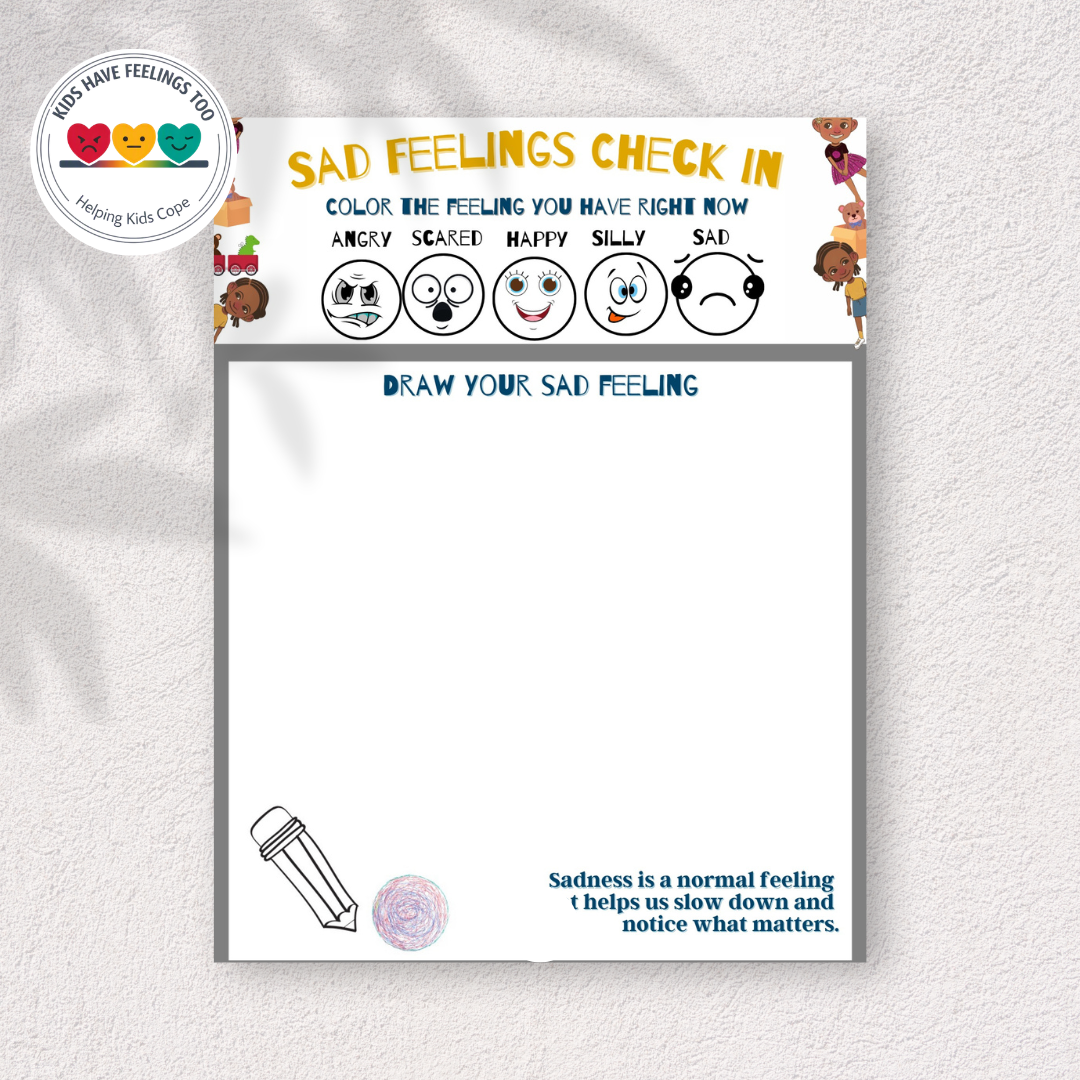
A simple, school‑friendly worksheet that helps kids identify and express their feelings. Children color the feeling face that matches how they feel today and draw what their sadness looks like. Perfect for classrooms, counseling sessions, and at‑home emotional check‑ins.
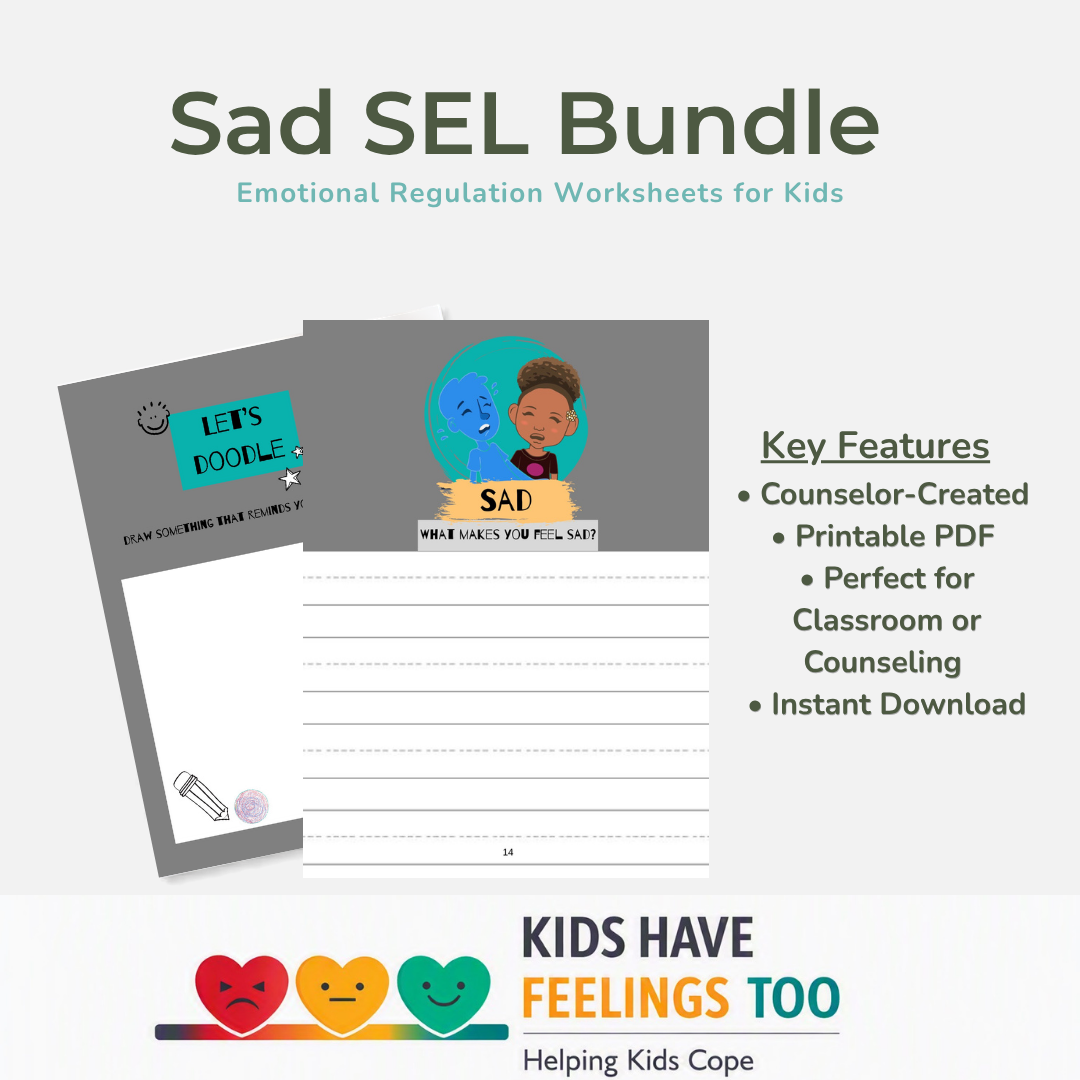
The Sad SEL Bundle is a gentle, developmentally‑appropriate emotional learning resource that helps children understand, identify, and express sadness in healthy ways. This printable set includes multiple worksheets designed for classrooms, counseling sessions, and at‑home emotional support.
Children explore sadness through feeling faces, vocabulary, drawing prompts, and simple regulation activities. Each page is created to help kids build emotional awareness, practice expressive language, and connect their experiences to supportive strategies.
This bundle is ideal for teachers, school counselors, therapists, and parents seeking a clear, structured SEL activity focused on sadness.
✨What’s Included
All pages are based directly on the PDF you provided:
✅ Daily Feelings Check‑In Page Includes a thermometer coloring activity, feeling faces (Angry, Scared, Happy, Silly, Worried), and a chart of emotional vocabulary such as “Explosive,” “Anxious,” “Lonely,” and “Content.”
✅ What Does It Mean to Feel Sad? A child‑friendly explanation of sadness, including examples like eating more or less, sleeping more or less, and having mean thoughts about yourself.
✅ Sadness Can Look Like… Visual examples and scenarios such as fighting with a friend or losing a family member.
✅ What Makes You Feel Sad? A guided reflection page with a large space for children to write or draw their personal experiences.
✅ Let’s Doodle: Draw Something That Reminds You of Sadness A creative prompt encouraging expressive drawing.
✅ Stretching Activity Page A simple regulation exercise with instructions like rolling the head from shoulder to shoulder.
✅ Emotion Vocabulary Word Search A printable word search featuring SEL vocabulary such as relaxed, glad, peace, joy, love, sad, worry, brave, and anger.
✨How to Use
These worksheets can be used in:
✅ Morning meetings
✅ Counseling groups
✅ Individual therapy
✅ Classroom SEL lessons
✅ Home emotional check‑ins
They support emotional vocabulary, self‑expression, and regulation skills.
✨File Format
✅ Ready to print
✅ For personal, classroom, and counseling use only
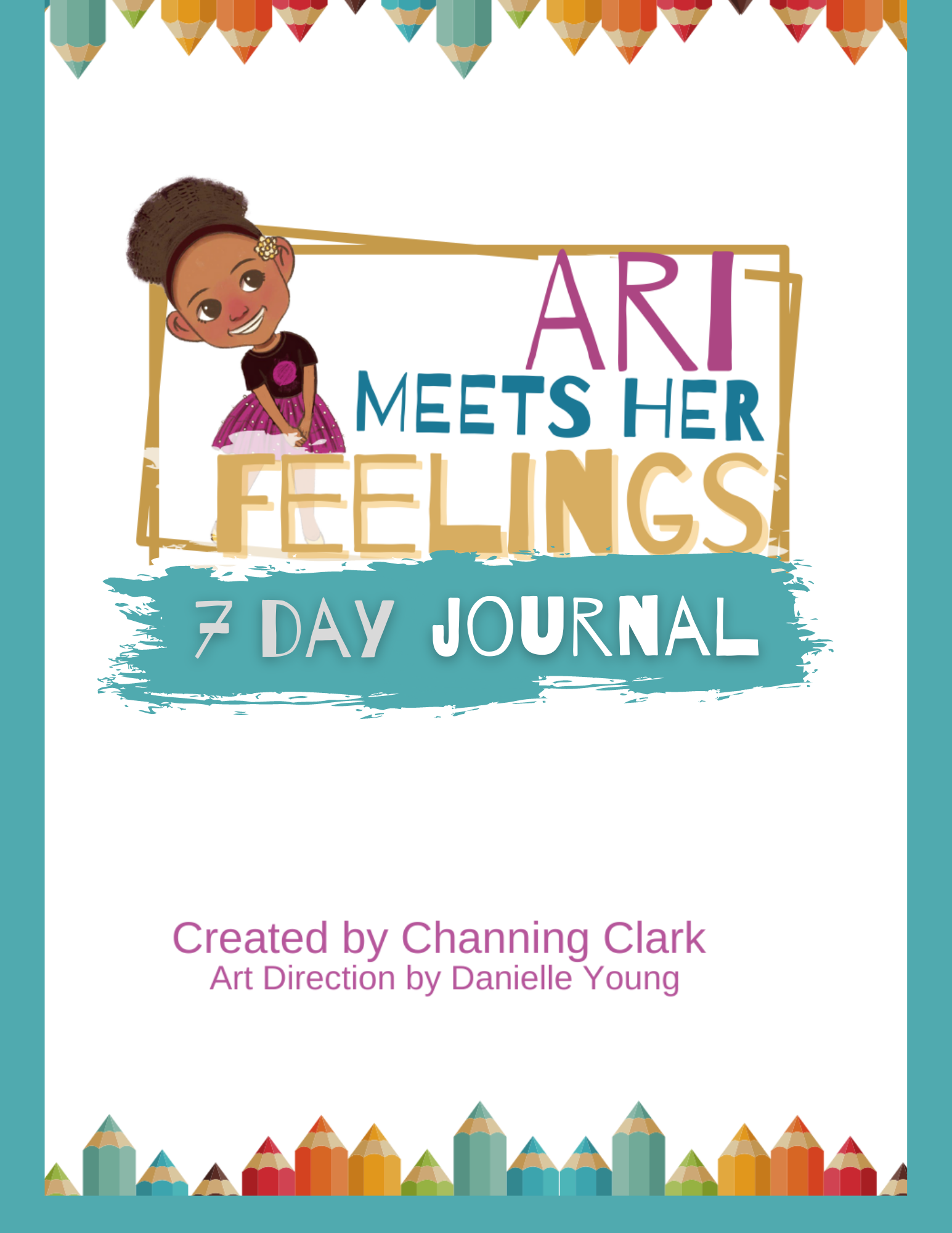
Did you know journaling for kids has many benefits?
Children who journal have been known to have:
✅ Higher self esteem
✅ Greater resilience
✅ Strengthened love for learning
✅ Willingness to take on challenges
✅ Enhanced communication skills
✅ Improved writing skills
✅ Improved decision making skills
✅ Improved ability to process anger, sadness, regret and other challenging emotions
With over 10 years in the mental health field, Channing Clark is a mental health therapist and author of the Ari Meets Her Feelings children's book series.
✨This book is printable and will be given to you as a downloadable pdf. This is nonrefundable.

This 30 day journaling guide helps children to build their emotional intelligence by increasing their emotional awareness, providing resources on how to manage their emotions, providing tools to increase their motivation, and improve social skills.
FOR SCHOOLS & PROFESSIONALS
Our tools are also used by teachers, counselors, and organizations. If you’re interested in a training or consultation, you can explore our professional services.
